SAR-based FFM service tutorial
Find SAR-FFM service description and specifications here.
Select the processing service
After the opening of the Hydromet workspace of the CopernicusLAC Platform open the Processing Services panel by clicking on the button located on the top right of the map.
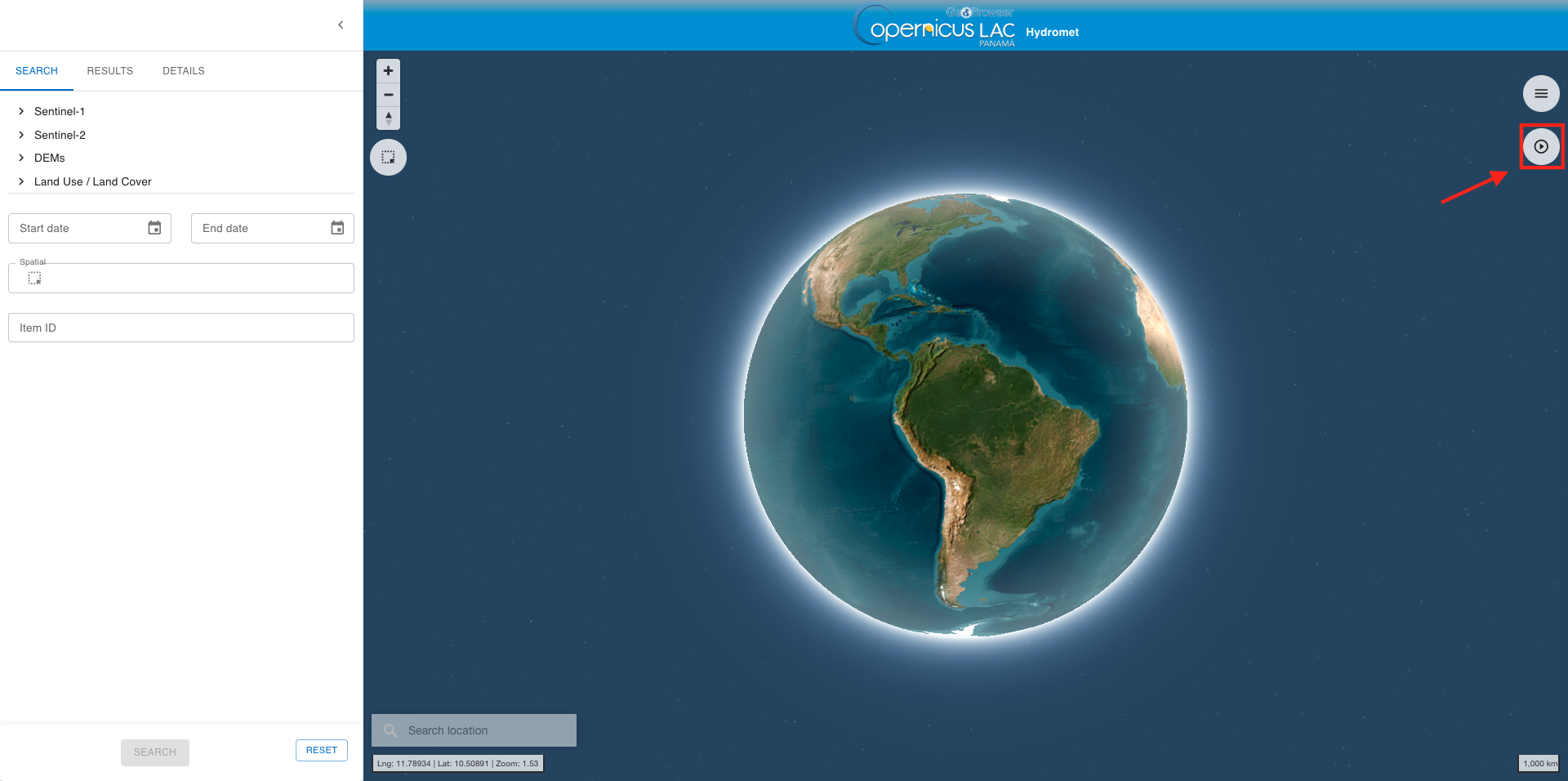
The Processing panel will be displayed with the list of on-demand services available for this workspace.
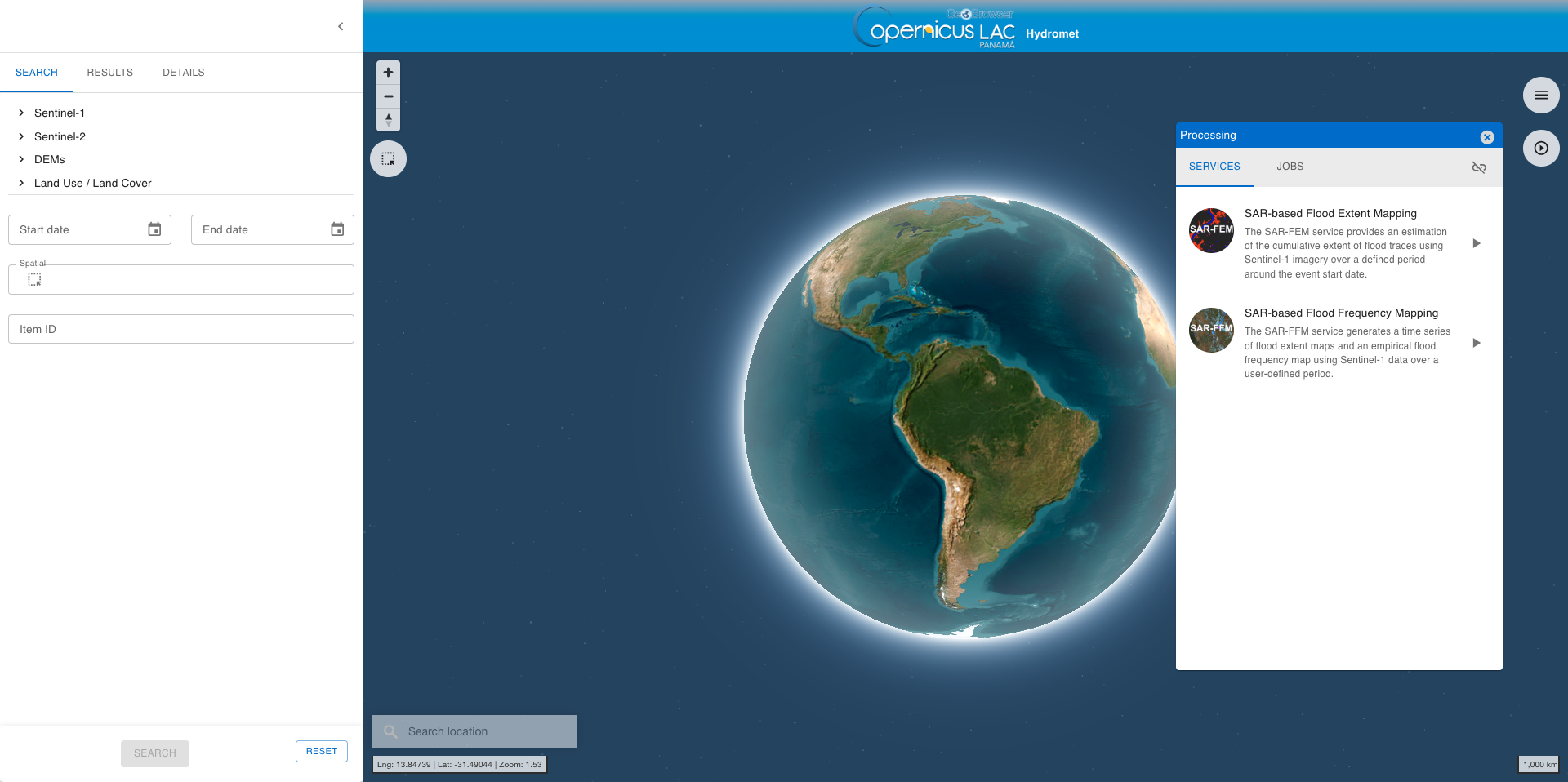
Find the SAR-based Flood Frequency Mapping (SAR-FFM) service from the list and click on the button next to it.
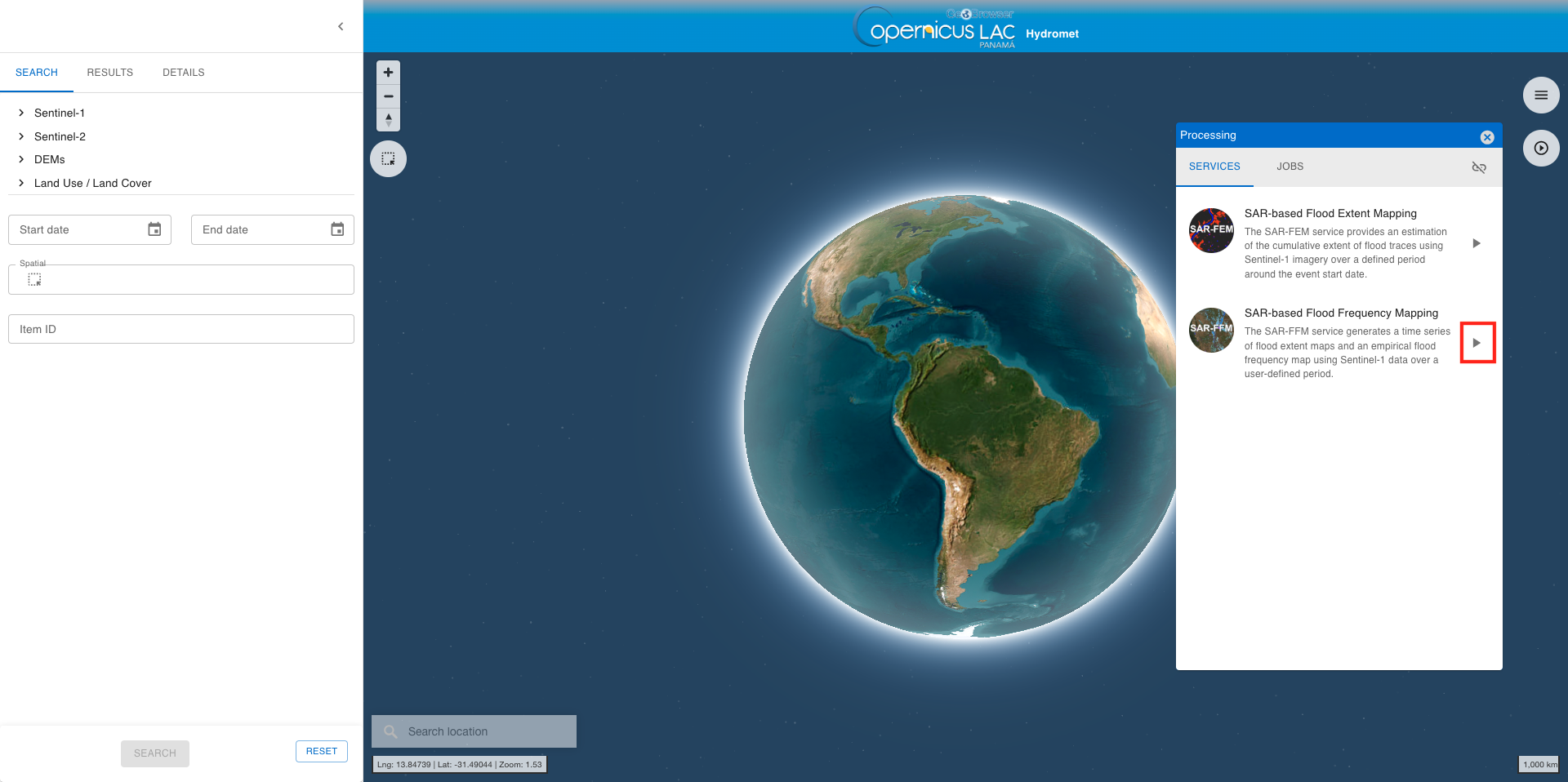
This tab provides a quick description of the service. In the upper part of the tab are shown:
-
service full name,
-
service caption,
-
hyperlink to the online documentation
-
version of the service.
Below that are listed all mandatory and optional parameters that the user must define when submitting the on-demand processing. Each parameter is described with:
-
a grey circle on the left indicating the format of input value required for the parameter. As an example if the parameter is a string (e.g. catalog reference) or a number (e.g. a threshold),
-
the identifier of the parameter,
-
a brief description of the parameter.
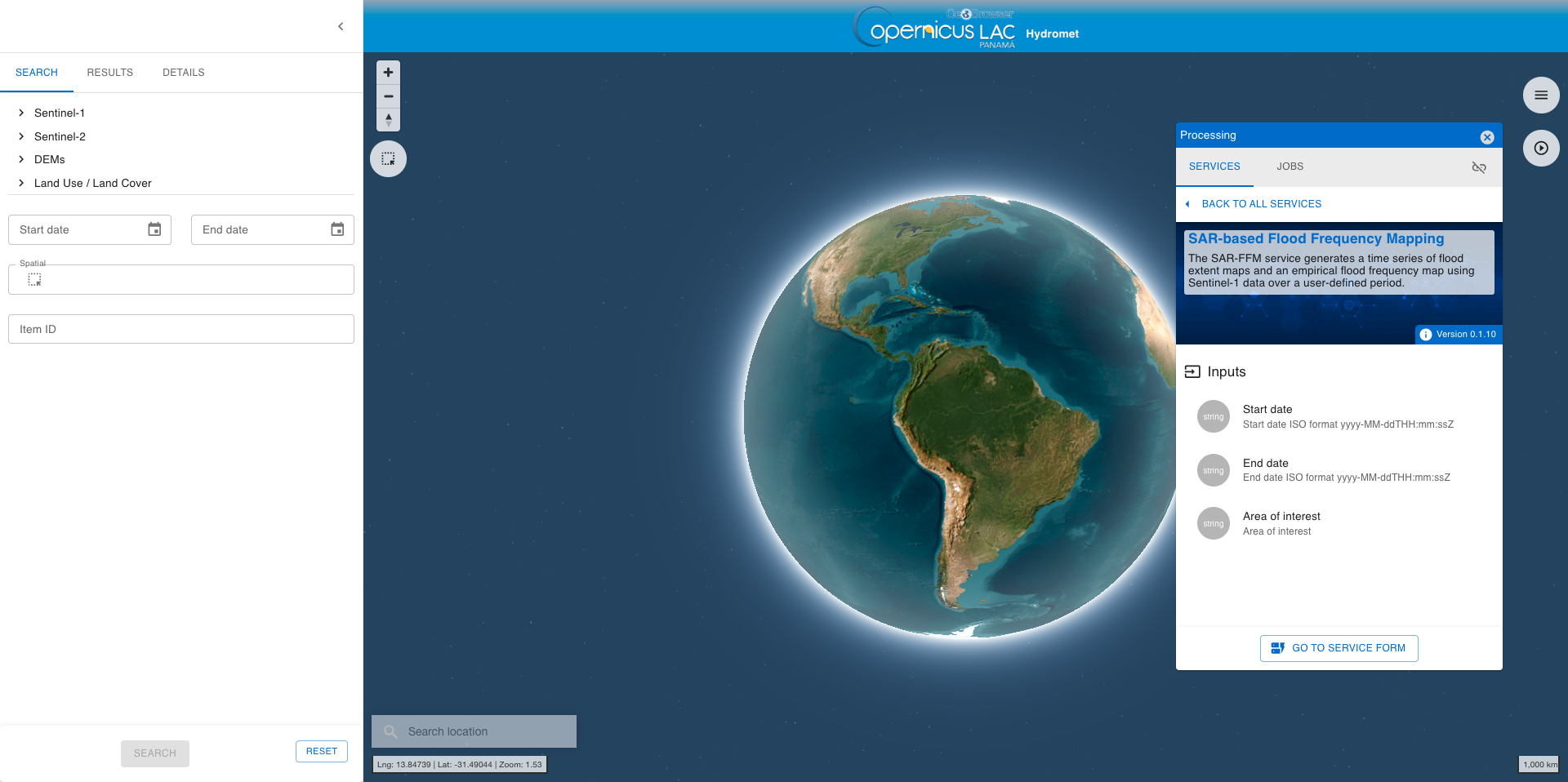
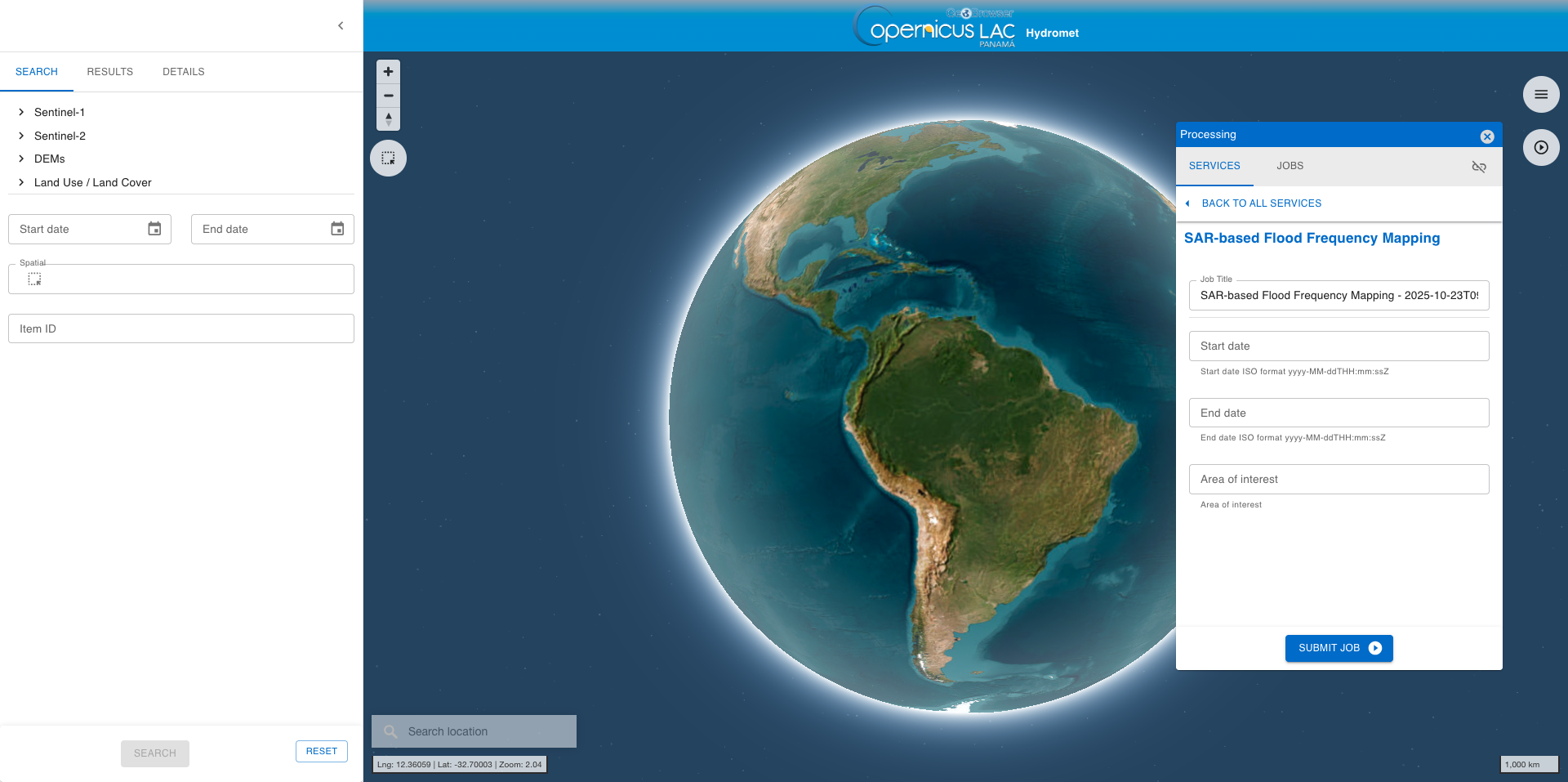
At the bottom of the tab is located the GO TO SERVICE FORM button. Click on it to move to the next tab where the user can fill-in all service parameters and submit the on-demand job.
Hint
To go back to the service panel click on the BACK TO ALL SERVICES button.
Fill the parameters
To start the SAR-based Flood Frequency Mapping service, you need to provide the following input parameters. Access the SAR-FFM service form and then fill-in the parameters as described in the following sections.
Hint
In case you can't find anymore the SAR-FFM service form:
-
open the Processing panel by clicking on the button on the top right of the map,
-
find the SAR-FFM service from the list of services,
-
click on the button next to it,
-
and then click on the GO TO SERVICE FORM button.
Job Title
The name of the job you are launching. A pre defined title is generated by the platform. Modify this name and assign the title you prefer. For instance, insert as Job title:
SAR-FFM - La Mojana Colombia 2022-02-23 to 2025-09-23
Note
If you don’t specify a name, the system automatically assigns one using the service name SAR-based Flood Frequency Mapping and the date and time of job creation.
Start and End Date
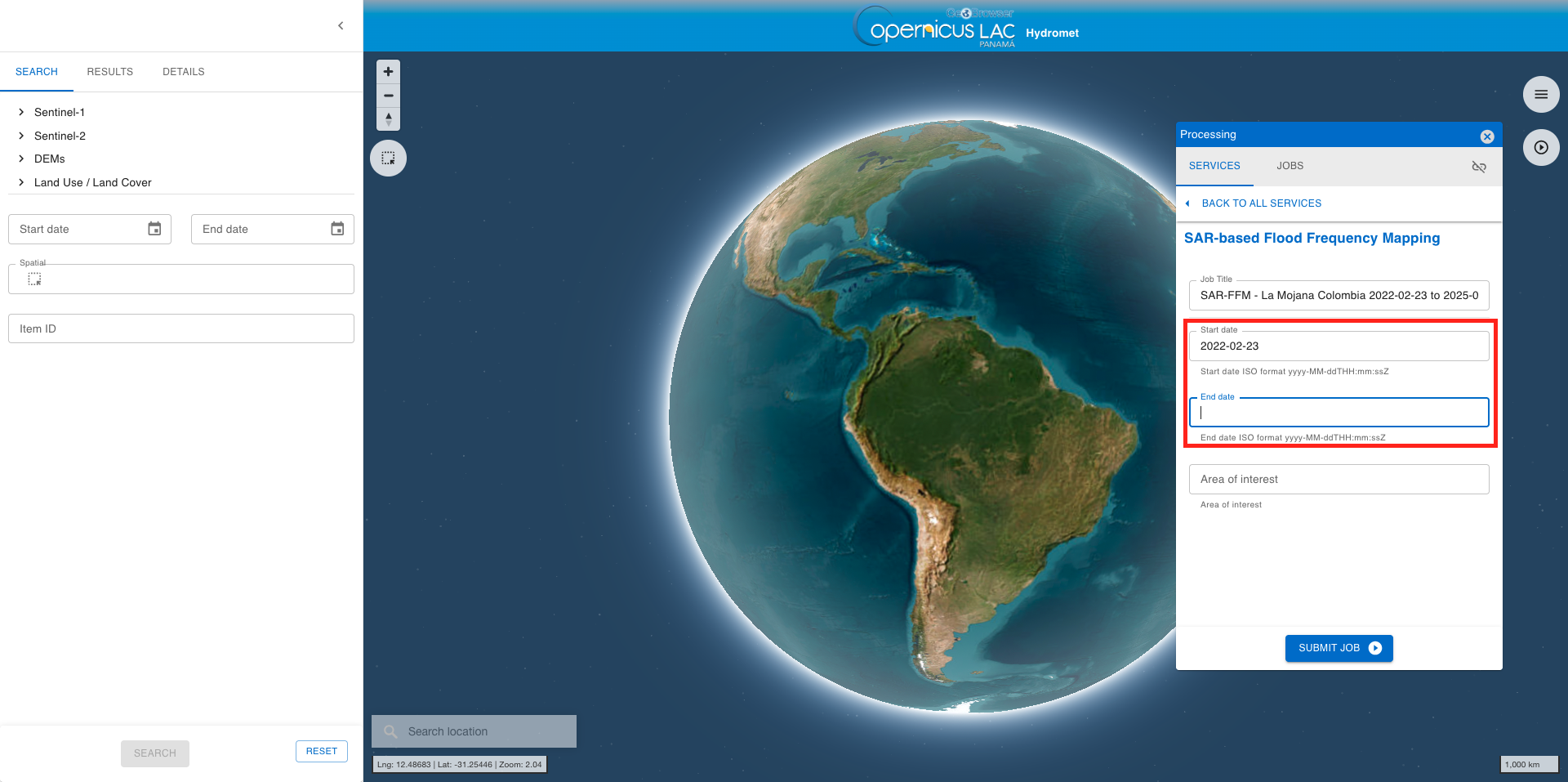
The dates before and after the flood event occurred. Start and end dates must be entered as a string in the format YYYY-MM-DD (for example, 2022-02-23).
Insert for instance as Start date:
2022-02-23
and as End date:
2025-09-23
Warning
The date must be inserted in the form YYYY-MM-DD. Do not insert for instance 23-02-2022 or 2022/02/23 but 2022-02-23.
Area of interest
The second mandatory parameter allows you to specify the geographic area where the flood event took place, and thus will be the area where the flood extent map will be produced by the service. The AOI must be provided as a WKT string representing the geometry of the area (polygon).
To define the AOI through the platform:
- Navigate the map to your AOI (e.g. La Mojana, Colombia).
Hint
Navigation controls are located on the top left of the map. From these buttons the user can:
-
Zoom in (+): left click on the button
-
Zoom out (-): left click on the button
-
Change the viewing angle by setting inclination and orientation: left click and hold the compass button while you drag left and right or up and down.
-
Reset bearing to the north: left click on the compass button
In the 3D view the user can tilt the map in any direction. The 3D tilt control is useful to view hills and mountains.
Hint
To see labels change to another baselayer as an example the Streets one.
Hint
For a quick search of a place of interest you can type the name of the location using the Search Location tool available in the lower left corner of the map.
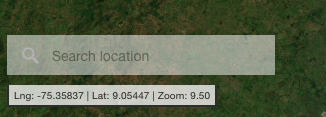
After the search the map will be automatically zoomed to a BBOX covering the location of interest.
- On the map interface, use the drawing tool “Filter by bbox” to draw a polygon describing your AOI.
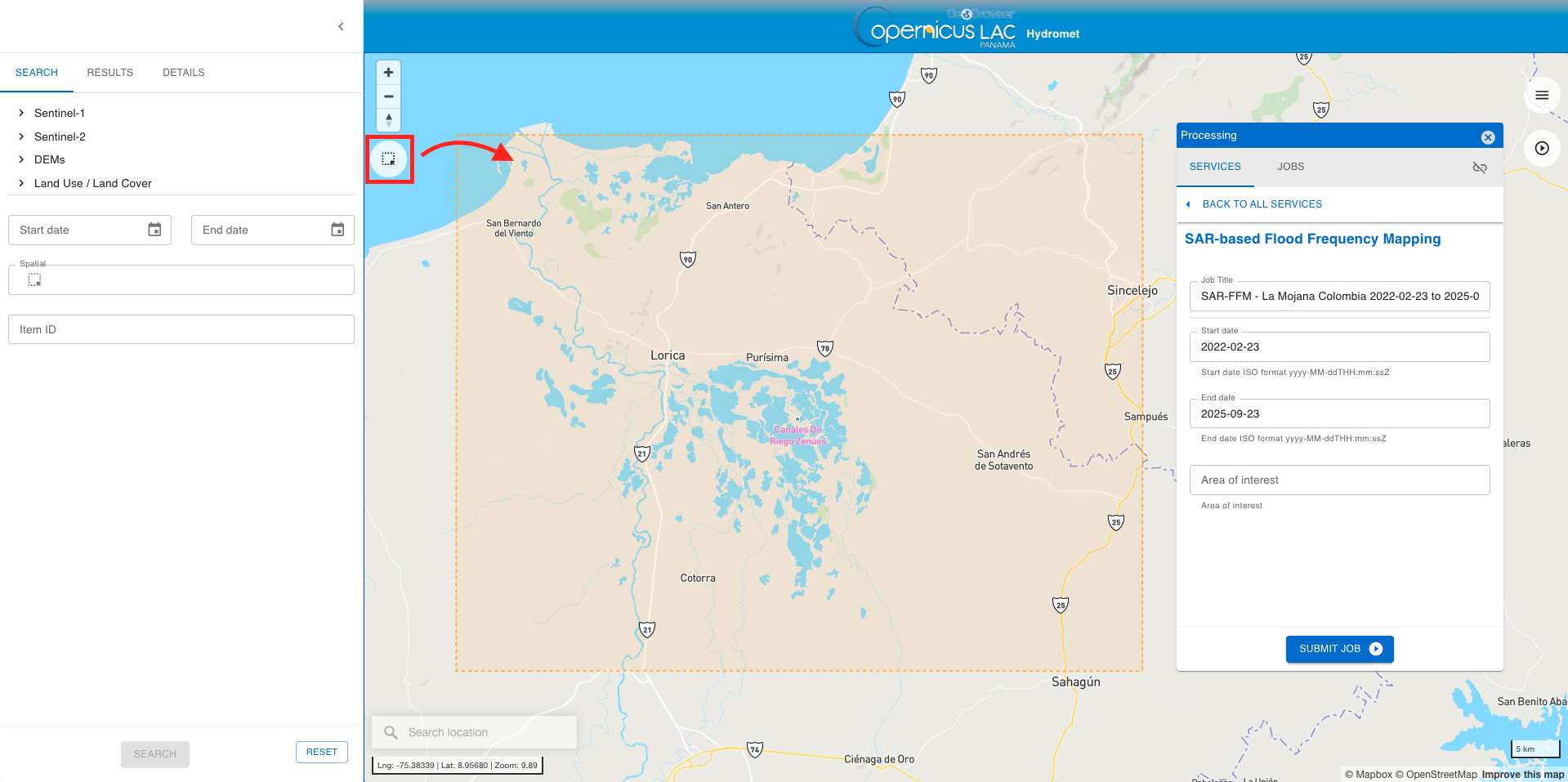
Hint
Do you already have a geometry as WKT string or a GeoJSON file and you want to employ it as AOI in your job? There is the option to import your AOI by clicking on Filter by AOI import button located in the upper left corner of the map under the navigation toolbar.
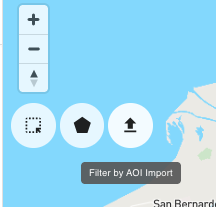
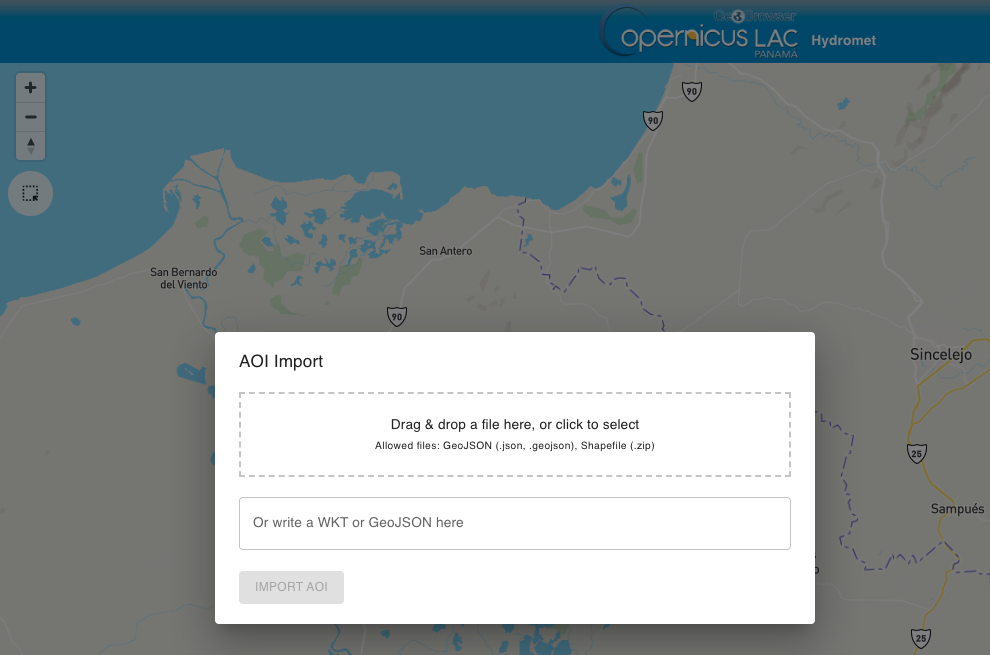
After that paste your WKT value in the dedicated field and click on IMPORT AOI button
- Once you finish drawing a polygon, a popup box will appear providing the options to SEARCH BY AOI or REMOVE AOI. Click on SEARCH BY AOI to employ this polygon in the search.
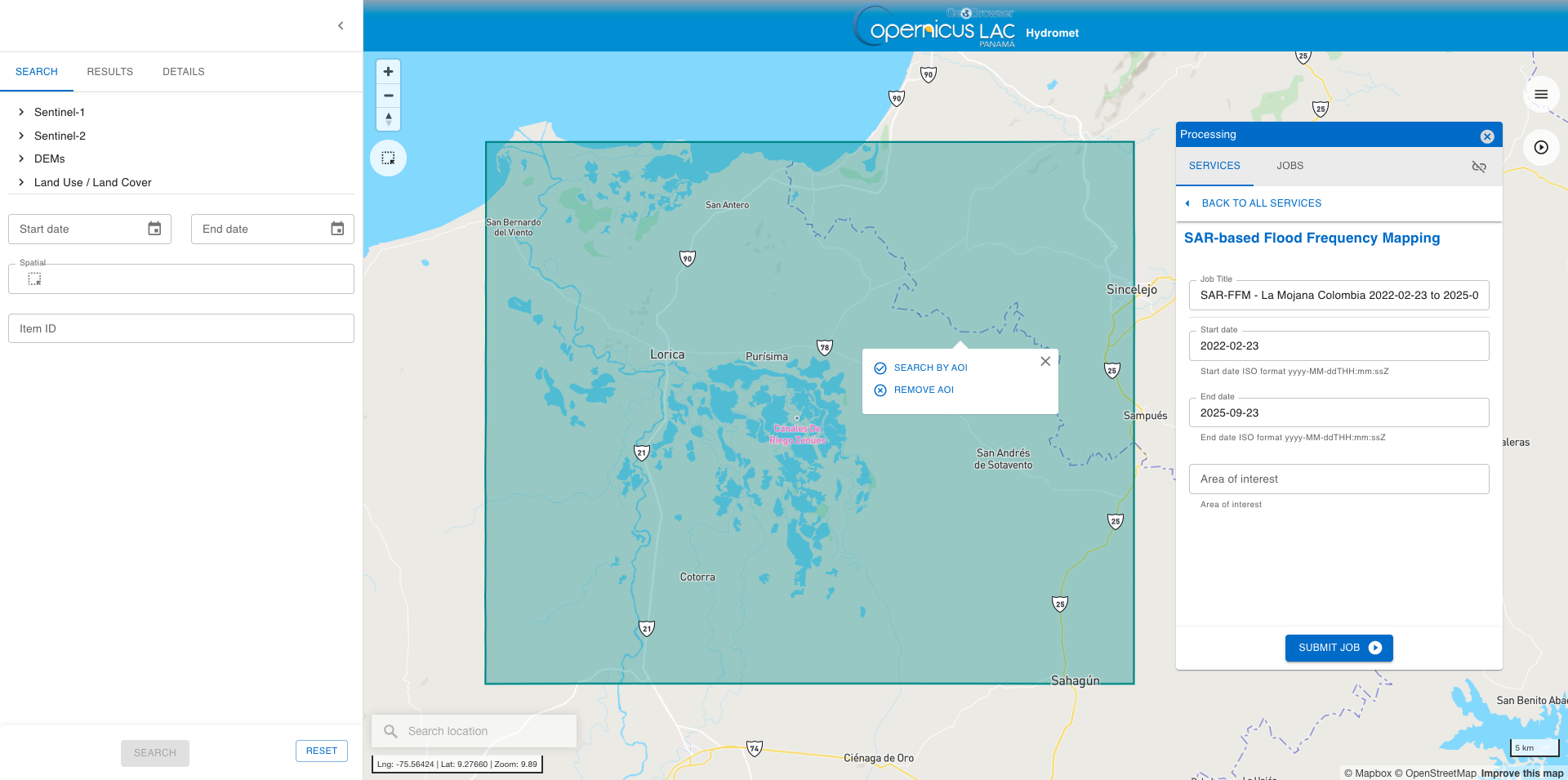
- After that the coordinates of your polygon will automatically appear in the Spatial field on the Search panel on the left.
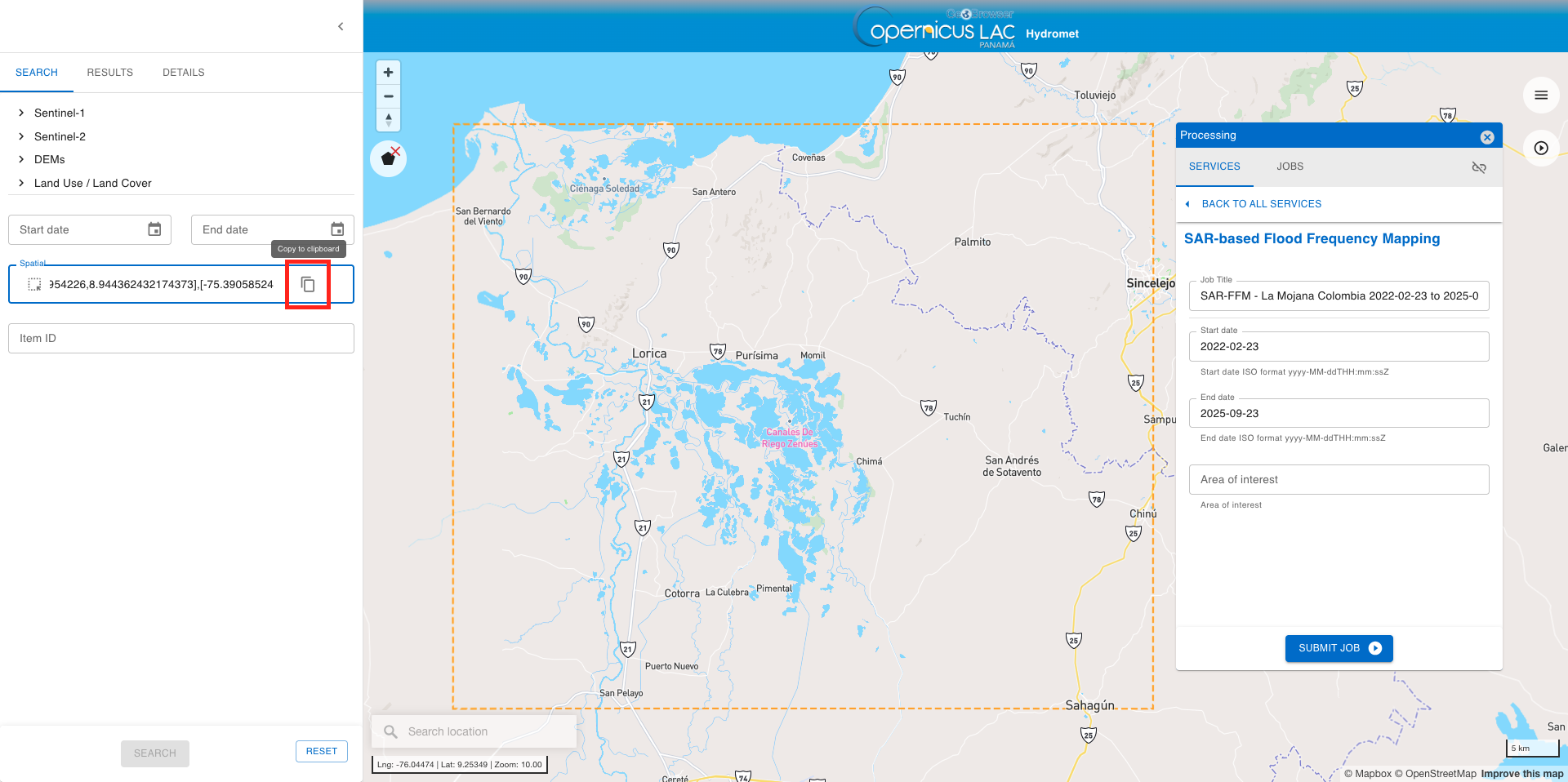
- At this point you can now copy the WKT coordinates from the
Spatialfield by clicking on the Copy to clipboard icon and then on the Copy WKT option.
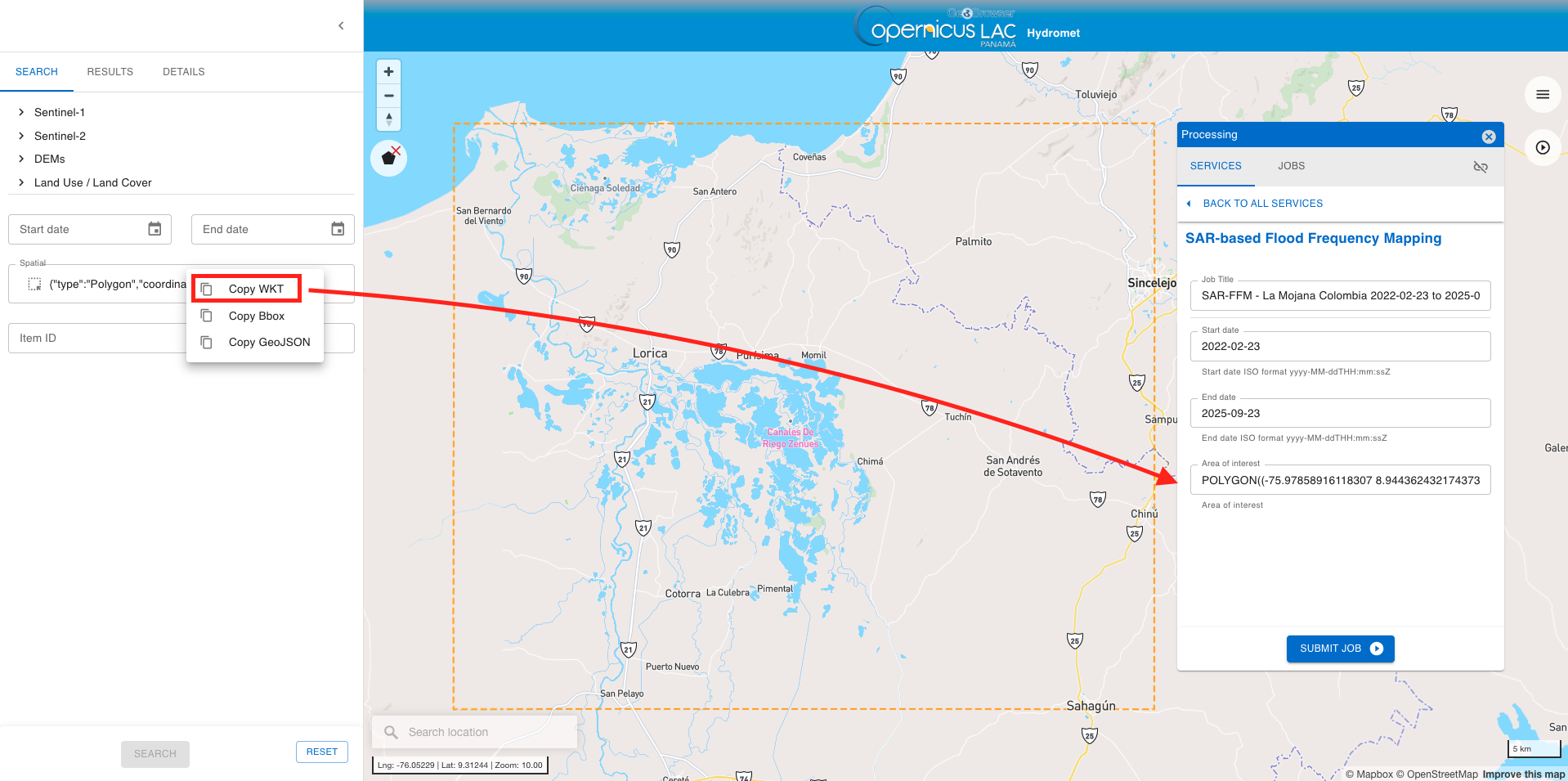
- Finally, you can paste the value into the Area of interest field in the SAR-FFM service form. After the paste you will get a WKT string like the one reported below.
POLYGON((-75.97858916118307 8.944362432174373, -75.39058524954226 8.944362432174373, -75.39058524954226 9.429604602720929, -75.97858916118307 9.429604602720929, -75.97858916118307 8.944362432174373))
Submit the job
After filling in all the required parameters, click SUBMIT JOB to start the service.
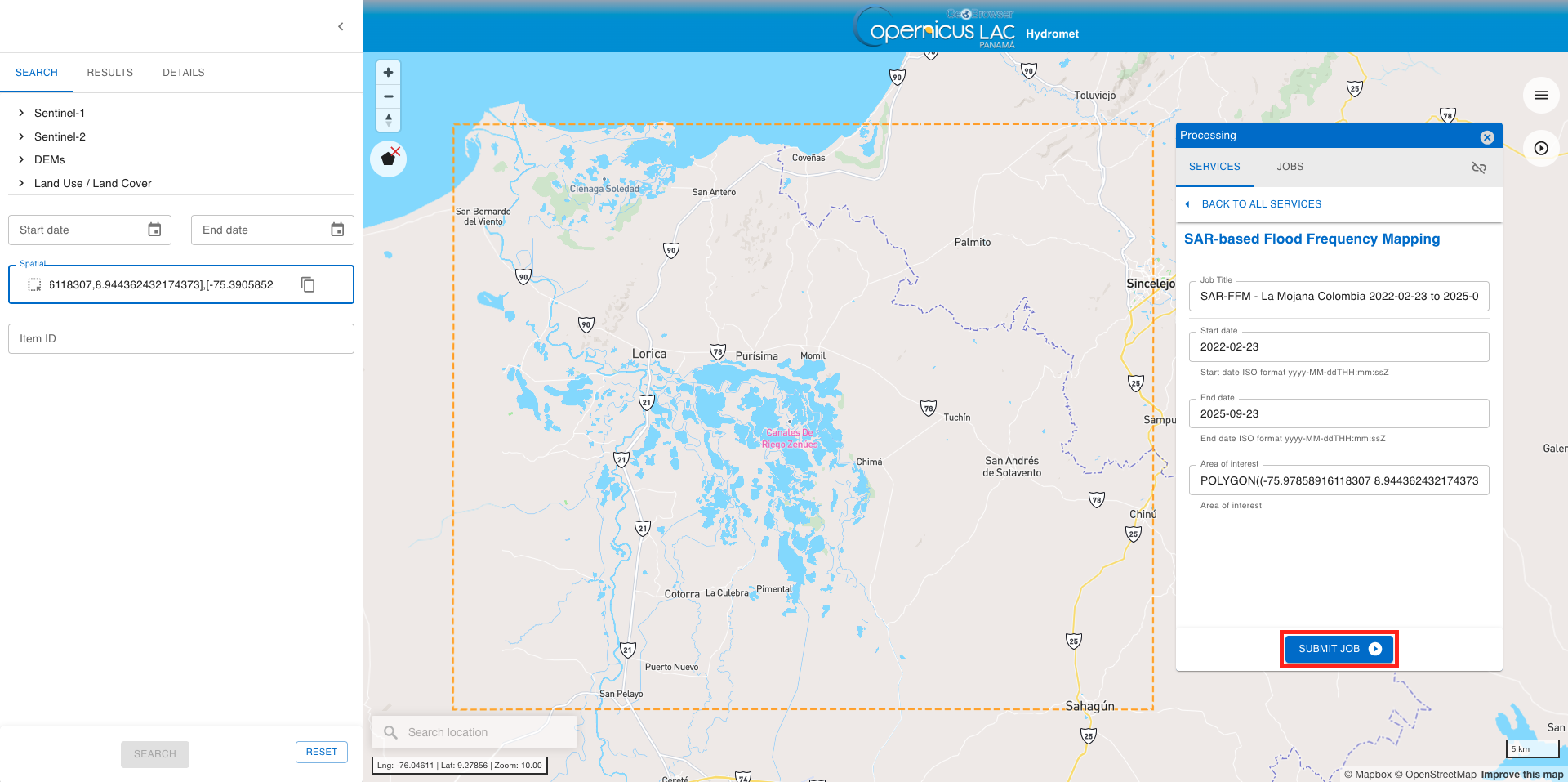
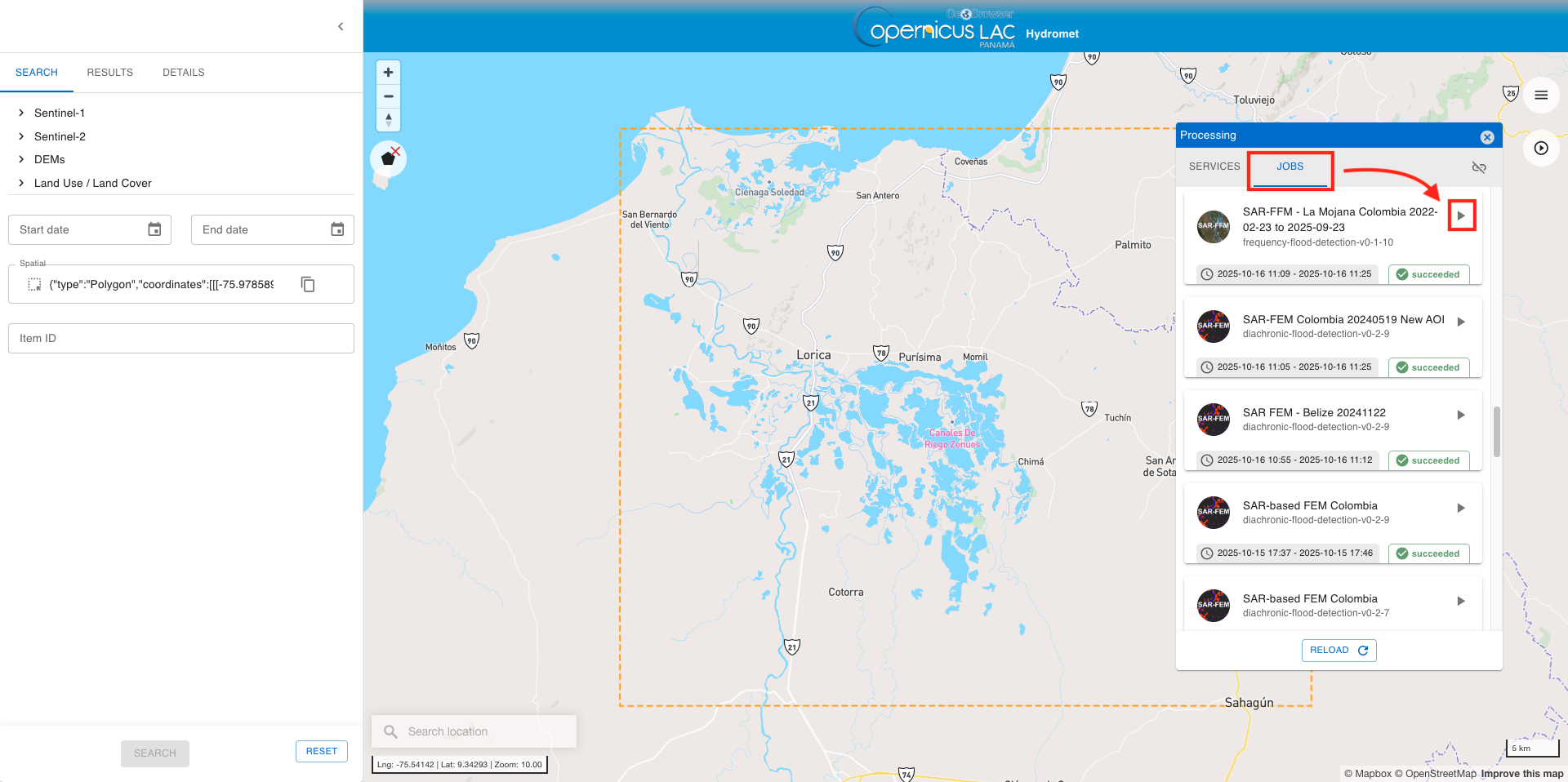
Once submitted, you will be automatically redirected to the JOBS tab, where you can view the list of all previously submitted jobs. Your newly created job will appear at the top of the list.
From this tab, you can monitor the progress of your job, which can have one of the following statuses: running, succeeded or failed.
Note
Typically, the service execution is ranging from few to several hours depending on the extent of the user’s AOI, the number of S1 GRD products intersecting this area, the temporal period defined by stard and end date, if the S1 GRD calibrated data is already available in the catalog or shall be calibrated on the fly by the service, and the allocation of processing resources for the job to be executed. As an example, to employ the SAR-FFM service over an AOI of 300000 ha using 23 Sentinel-1A GRD datasets already pre-calibrated by the platform, the processing time is approximately 1.5 hours.
Results
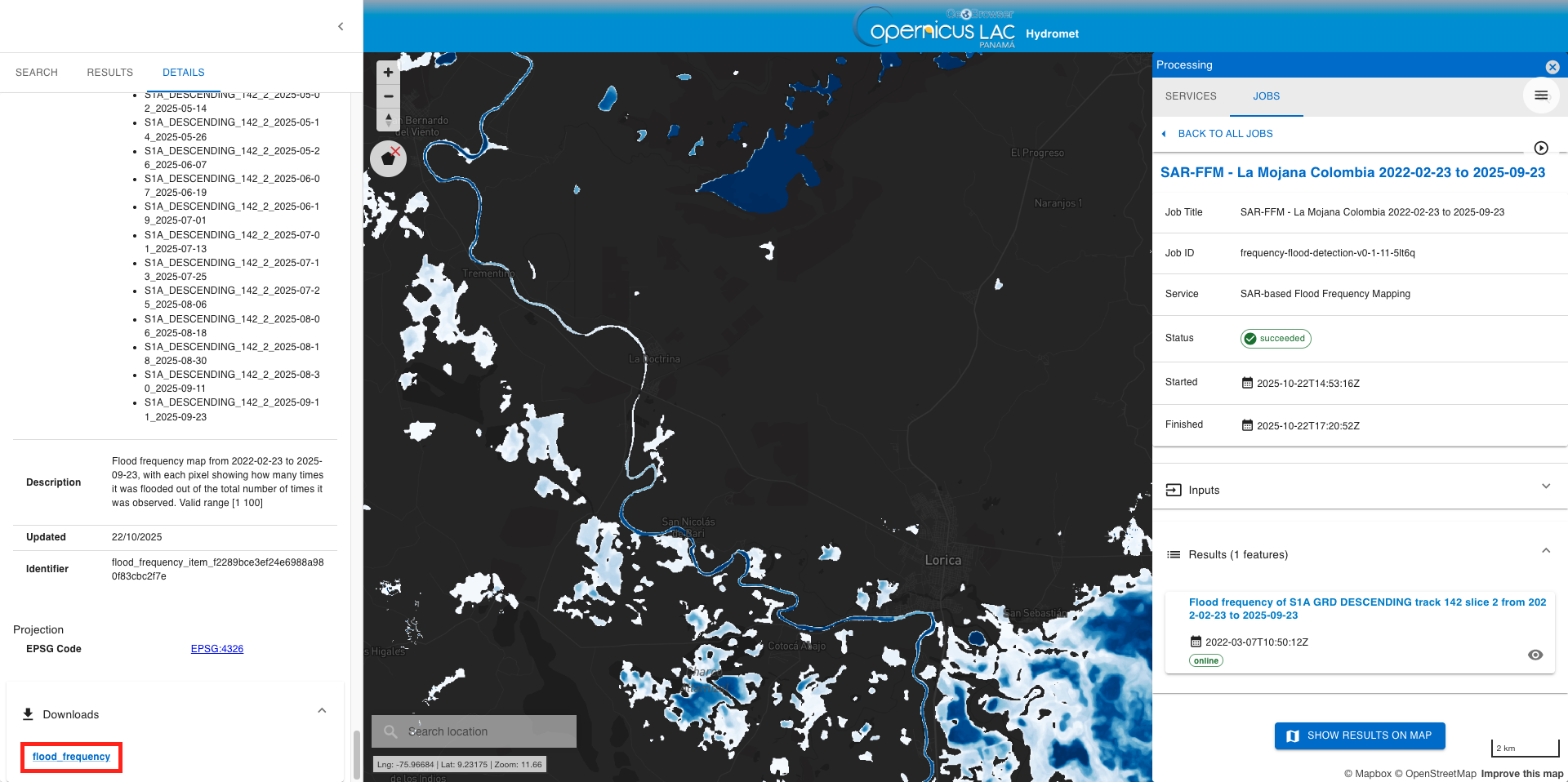
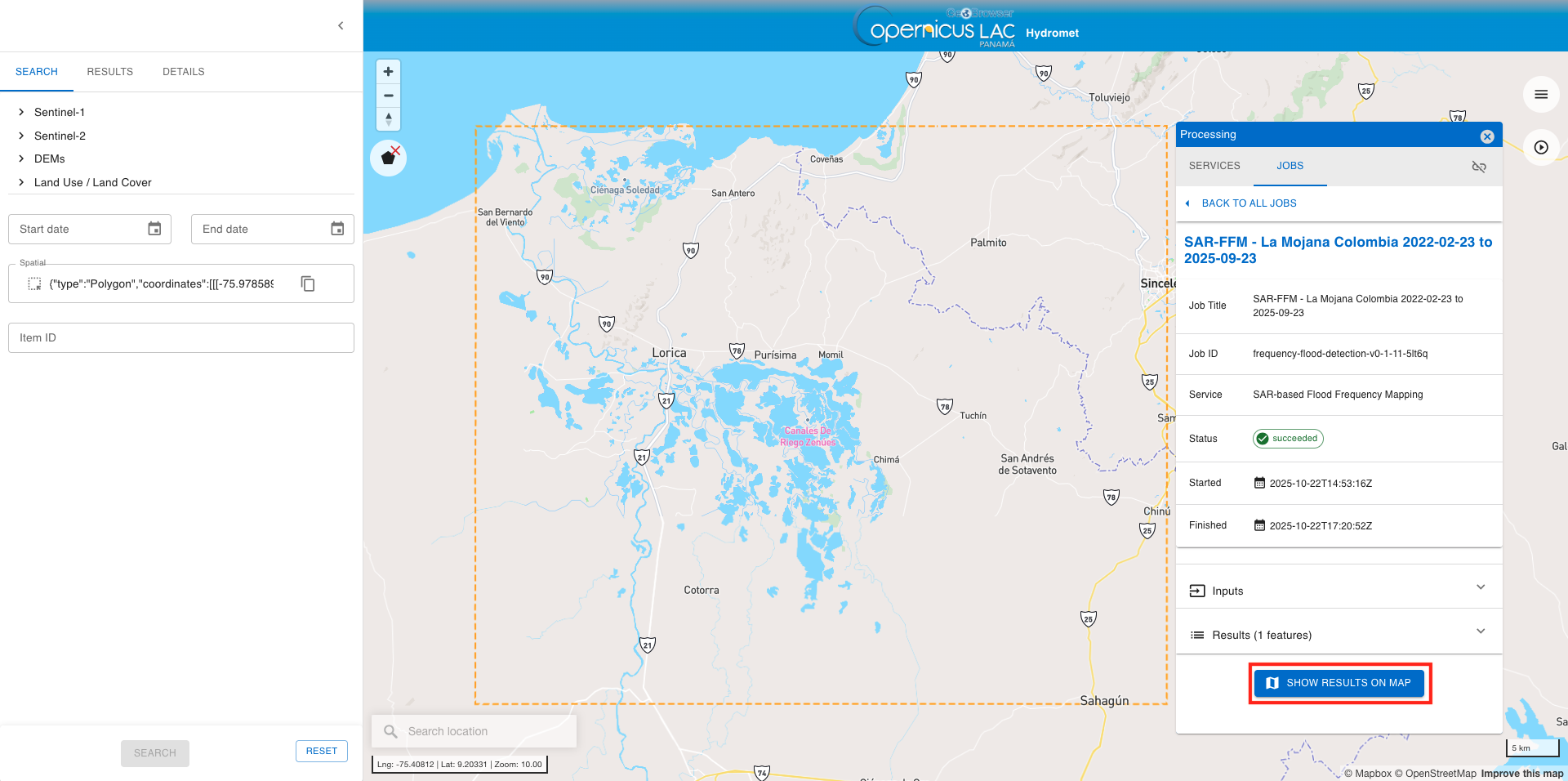
Once the job is successfully accomplished, under the job details click on the button SHOW RESULTS ON MAP located in the JOBS tab of the left panel.
After that all the products generated by the service will be displayed on the map.
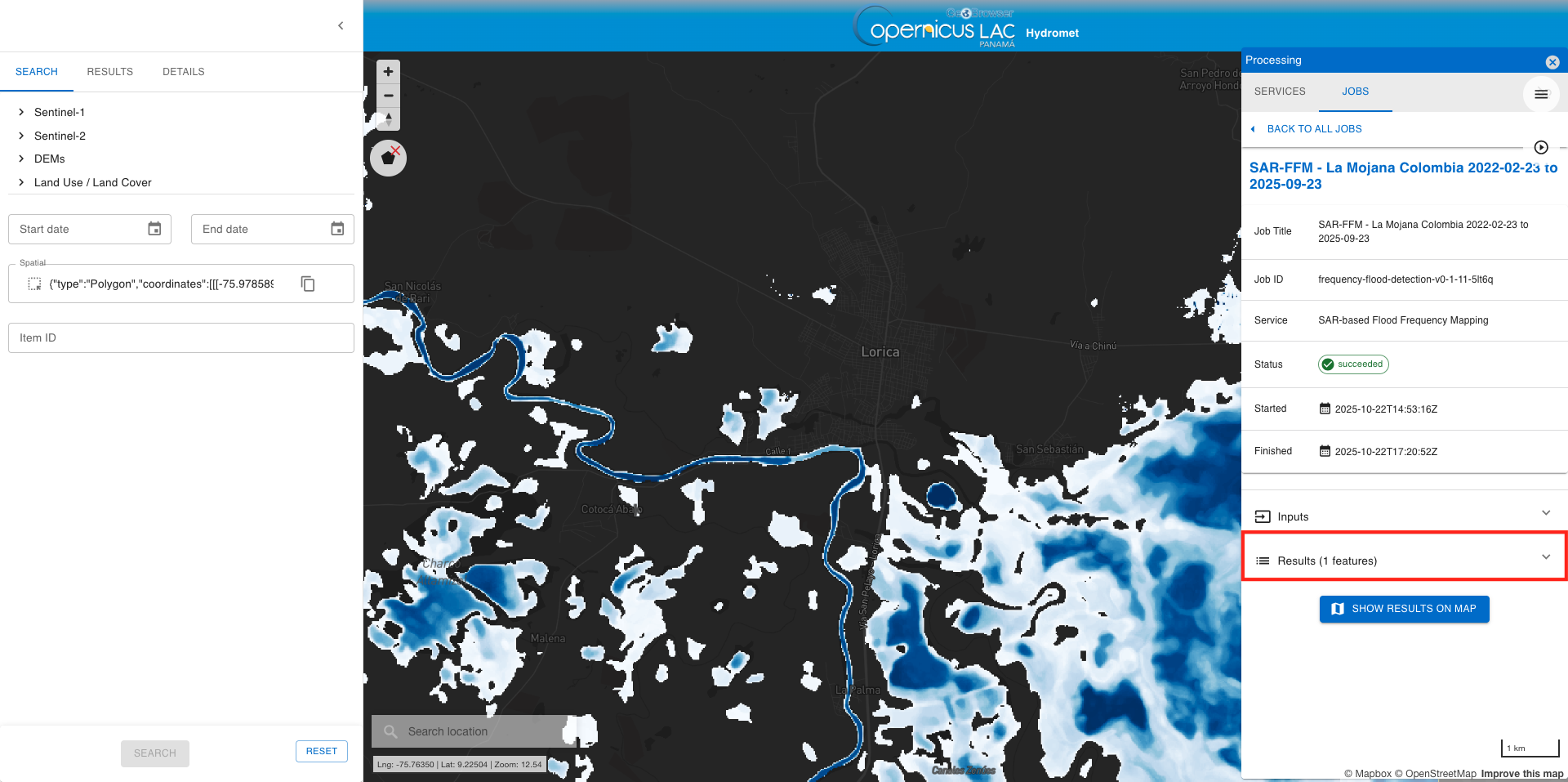
From the details of the job, accessible in the JOBS tab of the left panel, you can consult the input parameters employed in this job and you can access the results generated by the service. This is possible by clicking on the Input or the Results dropdown list buttons.
Click on the Results (1 feature) button to find the single asset generated by the SAR-FFM service that can be visualized in the map.
Select the Flood frequency of S1A GRD DESCENDING track 142 slice 2 from 2022-02-23 to 2025-09-23 product by clicking on the title. After this selection the single product will be displayed on the map with related metadata shown under the DETAILS tab in the left panel.
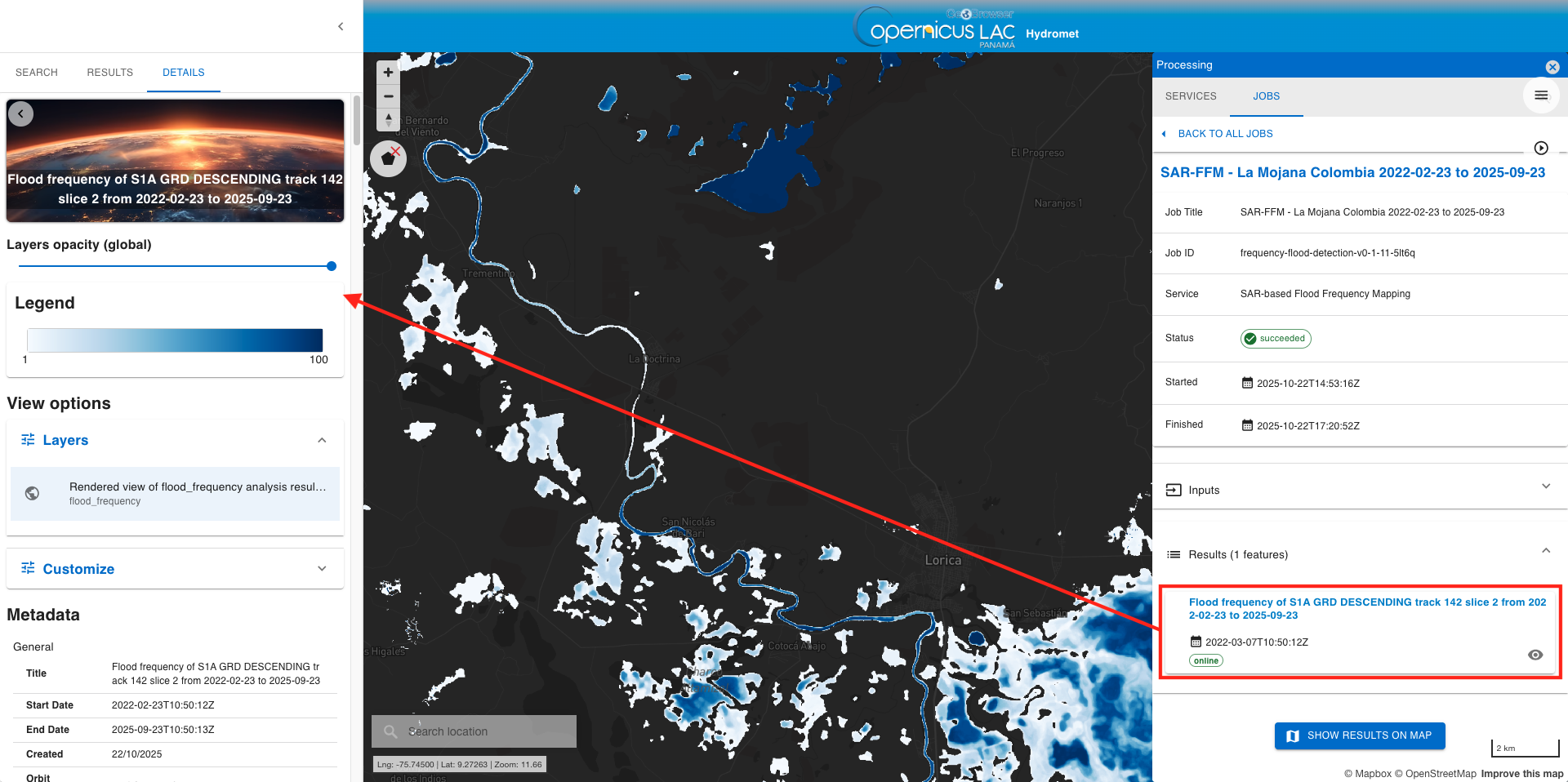
From DETAILS tab in the left panel it is also possible to:
-
set the opacity of the layer,
-
visualize the legend of the product,
-
under view options consult the render applied to the layer and, its histogram (when available), and apply a custom render,
-
download the product.
Consult the Metadata available. You can find for instance more information about how to interpret the result under Description, or you can retrieve the list of IDs of the Sentinel-1 GRD product employed by the service under Derived from (109 in this case).
Hint
Do you want to see both the result and the underneath satellite imagery baselayer? Try using the Layers opacity (global) bar, and set the opacity as 50% to better see for instance also the labels of the basemap layer.
Note
Aren't you satisfied with the default render of the product available under Layers in the View options? You can customize it by clicking on Customize under View options in the left panel. You can for example change the rescaling of the frequency single band asset using the image stretching, or select one of predefined colormaps to render it differently on the map. Please note that when you apply a custom render to the asset the legend will be updated accordingly.
To download the product from the left panel click on the Downloads dropdown button and then on the hyperlink of the single asset.